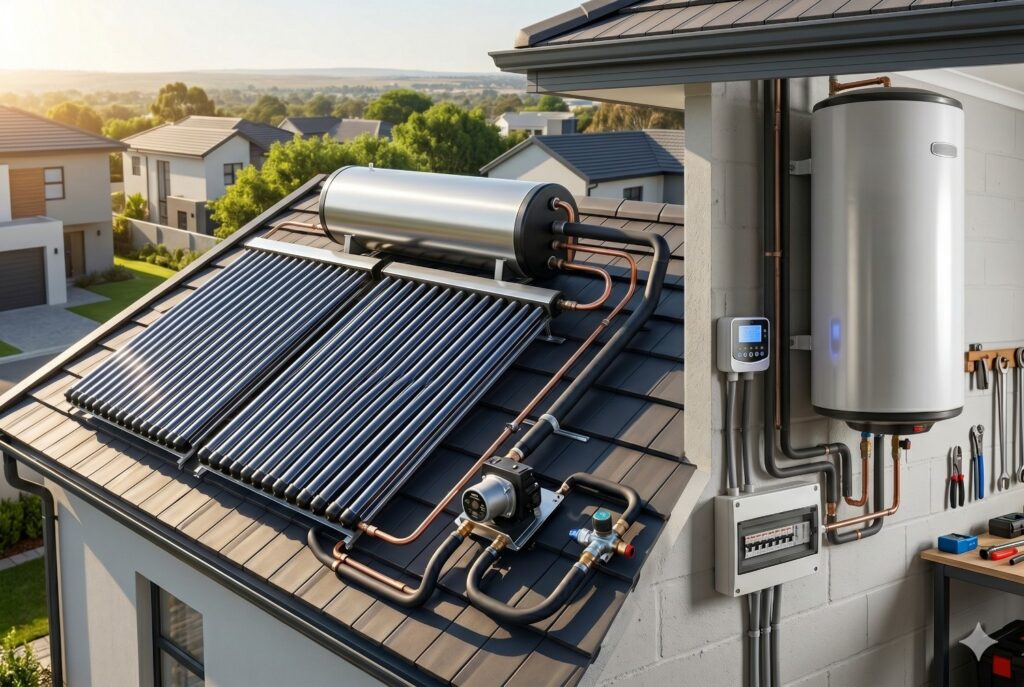
We find that high-pressure solar water heaters, particularly evacuated tube systems, offer superior long-term financial viability over conventional electric geysers. Your selection between a direct solar system and an indirect one will depend entirely on local water quality and frost frequency. For immediate budget alignment, modern electric geysers with smart timers remain a compliant, albeit less efficient solution.
Understanding the Core Differences: Solar vs Electric
Choosing between a solar and an electric water heater requires balancing upfront capital expenditure against long-term operational costs and energy reliability. The core differences between solar and electric geysers include:
- Electric Geysers: These conventional systems utilize a straightforward internal resistance heating element governed by a thermostat to heat water within an insulated storage cylinder. While they offer a significantly lower initial installation cost, they incur high continuous running costs linked to fluctuating electricity tariffs and remain completely vulnerable to grid interruptions like load shedding.
- Solar Geysers: These advanced systems harness direct thermal energy from the sun using specialized collectors to heat water or transfer fluid. Although they demand a higher upfront financial investment, they drastically reduce monthly electricity consumption and provide substantial long-term savings while operating independently of grid availability.
Understanding these operational frameworks allows property owners to select an optimized water heating solution that lowers utility bills and secures consistent hot water delivery.
The Financial Breakdown: Initial Costs and Monthly Savings in SA
While standard electric geysers have a much lower upfront installation cost, their initial savings are quickly eroded by high operational expenses. In contrast, a fully installed, SABS approved solar geyser requires a significantly higher initial capital expenditure due to complex components like collectors and control mechanisms.
However, heating water accounts for 40% to 60% of a South African household's electricity bill, meaning a solar system rapidly recovers its cost. As Eskom tariffs continue to rise, the return on investment timeframe shortens, allowing the solar installation to transition quickly into a financial asset that delivers free hot water for the remainder of its operational lifespan.
Pros and Cons of Electric Geysers in the South African Context
Conventional electric geysers remain a standard fixture in many South African properties due to their predictable installation framework and immediate availability. The primary pros and cons of utilizing electric geysers within the South African context include:
- The Pros of Electric Geysers: These units offer a significantly lower initial acquisition and installation cost, making them highly accessible for budget-constrained projects and developments. They provide reliable hot water on demand regardless of weather conditions.
- The Cons of Electric Geysers: Their primary liability is a complete dependence on the national grid, which leaves property owners without hot water during routine load shedding cycles. Additionally, they are highly energy-intensive systems that drive up monthly utility bills, exposing consumers directly to steep and frequent tariff increases unless paired with external timers to regulate unnecessary heating cycles.
Evaluating these contrasting factors allows property owners to determine whether the upfront affordability of a conventional system outweighs the long-term financial predictability of alternative energy solutions.
Pros and Cons of Solar Geysers: Efficiency and Reliability
Transitioning to solar water heating offers South African property owners a powerful way to secure energy independence and insulate themselves from rising utility tariffs. The primary pros and cons of utilizing solar geysers include:
- The Pros of Solar Geysers: These systems drastically reduce electricity consumption by meeting up to 90% of your water heating needs through solar radiation, providing a robust hedge against escalating electricity tariffs.
- The Cons of Solar Geysers: The initial capital expenditure and installation setup are considerably higher than conventional electric alternatives, and performance remains partially dependent on shifting weather patterns.
Carefully weighing these efficiency gains against the initial structural and financial investments allows property owners to select the ideal solar configuration for long-term reliability and savings.
The Impact of Load Shedding on Your Hot Water Supply
Load shedding cuts power to electric geysers and solar backup elements, rendering conventional units completely non-functional and slow to recover after an outage. Conversely, solar geysers offer strong grid resilience because their primary heating function relies entirely on daylight. Even if prolonged overcast weather paired with a blackout restricts the backup element, the core solar system continues to operate, providing a much more dependable hot water supply amid an unstable national grid.
Maintenance of Solar vs Conventional Systems
Electric and solar geysers require unique maintenance schedules that affect long-term ownership costs. Conventional electric systems need servicing every three to four years to check the anode rod, remove scale buildup, and test safety valves. Solar systems require those same tank checks plus annual upkeep, including cleaning collector panels, inspecting leaks, and replacing the heat transfer fluid every three to five years.
Precision Solutions with Tsukudu Plumbing
Our approach is grounded in technical precision and adherence to South African National Standards (SANS). We design and implement water heating solutions that deliver guaranteed performance within the specific operational context of your property.
Our expertise ensures that your system provides maximum efficiency and reliability, whether it is a conventional electric unit or an advanced solar installation. We conduct a thorough analysis to recommend a compliant solution that aligns with your financial and performance requirements. Get a quote using the button below.
FAQs
How much does a solar geyser save on electricity bills in South Africa?
A correctly specified and installed solar geyser can reduce the water heating portion of your electricity bill by up to 90%, which can translate to an overall household saving of 40% to 60%, depending on your usage patterns.
Does a solar geyser work during cloudy days or in winter?
Yes, solar geysers function on cloudy days and during winter, although their heating efficiency is reduced. Modern evacuated tube collectors are particularly effective at absorbing diffuse solar radiation, ensuring they can still heat water even without direct sunlight.
What is the price difference between electric and solar geyser installation?
The initial capital outlay for a solar geyser installation is significantly higher than for a standard electric geyser. The exact difference depends on the system type (flat plate vs. evacuated tube), size, and complexity of the installation, but you can expect the solar option to be a multiple of the cost of the electric unit.
Can I use my existing electric geyser as a storage tank for solar?
Yes, it is possible to retrofit an existing electric geyser to work with a solar collector system. This is a common and cost-effective method to transition to solar water heating, where the existing tank is converted to serve as a storage vessel, with solar collectors providing primary heating.